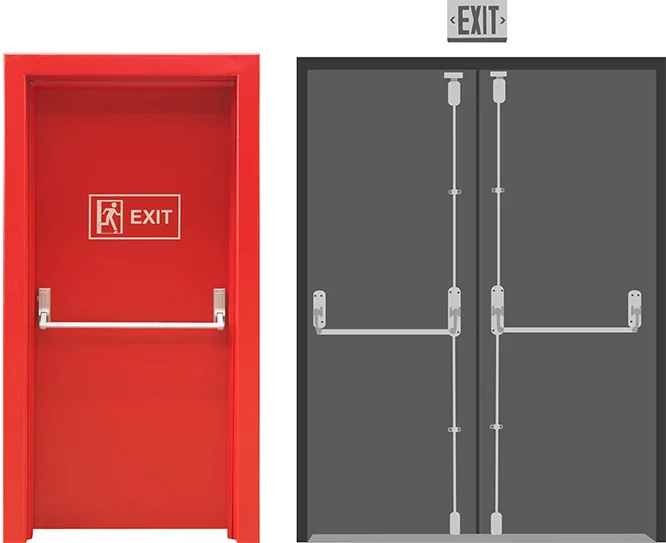
Hollow metal doors are a standard solution for commercial and institutional buildings where durability, code compliance, and operational reliability are primary requirements. They are selected for function and regulation—not decoration.
These doors are commonly integrated into systems that address fire separation, accessibility, and controlled access.
Where Hollow Metal Doors Are Used
Hollow metal doors are typically specified for:
Commercial buildings
Multi-unit residential common areas
Healthcare and educational facilities
Service corridors and secured zones
Their use is driven by building layout, occupancy type, and regulatory requirements.
Fire-Rated Applications
Hollow metal doors are frequently used in fire-rated assemblies, where required by code.
Important clarification:
Fire rating applies only when the entire assembly (door, frame, hardware, installation) is properly specified and approved
Ratings and configurations vary by application
Final fire-rating compliance must always be confirmed at the project level.
Accessibility & Automatic Operation
Hollow metal doors can be configured to support:
Wheelchair accessibility, where required
Automatic door operators for controlled or assisted entry
Compatibility with closers, panic hardware, and access control systems
Accessibility solutions are selected based on building use and applicable standards.
Performance & Construction Context
These doors are valued for:
Structural stability under heavy use
Compatibility with commercial hardware systems
Long service life in demanding environments
Finish and detailing are typically secondary to function and compliance.
Installation
Proper installation is critical, particularly for fire-rated and automated assemblies. Alignment, anchoring, and hardware coordination directly affect performance and code compliance.
Fire ratings, accessibility features, automation options, and performance characteristics depend on configuration and project requirements. Final suitability and compliance must be confirmed during design coordination and approval.