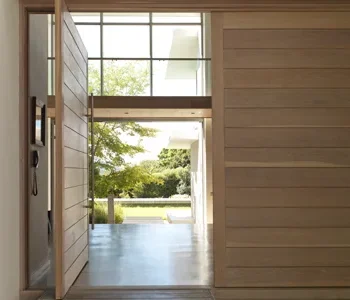
Pivot doors are architectural statement doors. Unlike conventional hinged doors, they rotate on a pivot point set away from the frame edge, allowing for larger, heavier, and more visually striking door panels.
They are selected primarily for design impact, not for everyday utility or budget-driven projects.
What Makes a Pivot Door Different
A pivot door changes how an entrance is experienced:
The door appears to float rather than swing
Wider and taller panels become possible
Modern or minimalist façades
Feature entrances with visual emphasis
This system shifts focus from hardware to proportion and scale.
Where Pivot Doors Are Typically Used
Pivot doors are most often specified for:
High-end custom homes
Architect-designed residences
Movement feels smoother and more controlled
The entrance becomes a design feature, not just an opening
They are rarely used for secondary doors or standard residential applications.
Design Comes First
Pivot doors are chosen when:
Aesthetics outweigh cost considerations
Large door dimensions are desired
Materials such as aluminum, wood, or composite panels are part of the architectural language
Technical Considerations
Because of their size and weight, pivot doors require:
Structural support planning
Precise alignment
Correct pivot hardware selection
Careful integration with the building envelope
Installation Is Critical
Pivot doors demand a higher level of installation accuracy. Improper setup can affect operation, sealing, and long-term performance. Professional installation is essential.
Pivot doors prioritize architectural expression. Suitability, performance, and detailing depend on door configuration, materials, and project conditions. Final decisions should always be made during the design stage.